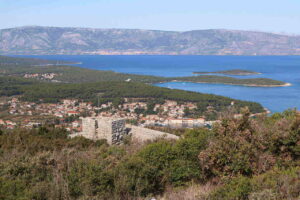
Hvar Is Bigger Than It Looks
Hvar Island stretches nearly 68km, with over 20 inhabited villages, 2 towns, over 200 km of hiking trails, many viewpoints, and loads of summer settlements.
Many first-time visitors try to fit Fortica Fortress, a swim stop, wine tasting, Pakleni Islands, and sunset into one afternoon.
Most of the day ends up being spent:
- Hiding in the shade
- Looking for a tourist info office
- Waiting for boats
- Looking for reservations
Hvar works better when you choose one main focus per day — cultural, countryside, or sea — and build around that.
If you’re interested in exploring the town properly, consider gaining firsthand knowledge.

Renting Scooters in Hvar During Peak Summer
Renting a scooter sounds romantic and flexible — until the July heat hits.
During peak summer, daytime temperatures regularly reach 35°C – 45°C, and many coastal roads offer little natural shade. Traffic increases significantly between 9:00 and 18:00, especially on routes toward Stari Grad and Jelsa.
After an hour in direct sun, the ride often becomes tiring rather than scenic.
A shaded vehicle, boat day, or slower inland exploration usually provides a better experience.
Visiting Hvar Only at Midday
Many visitors are active between 11:00 and 17:00 — exactly when locals slow down.
Midday is not “wrong,” but it should be planned differently.
Daytime works best for:
- Swimming stops
- Boat excursions (sea breeze helps)
- Indoor cultural sites
- Shaded streets in Hvar Town and Stari Grad
Morning and late afternoon provide cooler walking conditions and softer light, especially for viewpoints like Fortica.
If you’re planning a wine-focused afternoon instead, explore options like wine-tasting tours, where timing is part of the experience.
Assuming Hvar Is Either Cheap or Overpriced
Neither is accurate.
A quality dinner in Hvar Town typically ranges from 20€ to 150€ per person, depending on wine and location. That’s comparable to other well-known Mediterranean destinations.
You can eat cheaper — but the island’s food culture is part of the experience. Choosing the right place matters more than choosing the lowest price.
Thinking Hvar Town Is the Entire Island
Hvar Town is the entrance — not the whole story.

- Stari Grad offers quieter evenings and cultural heritage. Galleries, artisans, and small shops are hidden in the Dalmatian stone streets, one after another.
- Jelsa brings relaxed beaches, local producers, the most delicious sweets (ice cream), and wineries.
- Vrboska mixes water sports with wineries.
- Inland villages hide wineries and family farms that many visitors rarely discover on their own.
- Southern villages like Zavala and Sv. Nedjelja focuses on laid-back coastal life, with occasional lively nights called “Fishermen nights” – summer nights of wine, fish, and dancing.
- While festivals can be found across the island. The Tam-Tam festival in Sućuraj is the most famous one.
The island stretches approximately 70km, meaning proper exploration requires planning.
The Blue Cave Mistake Most Visitors Make
The Blue Cave is often treated as the main goal.
In reality, peak season waiting times can reach 2 hours, especially between 9:00 and 12:00 o’clock.
What most people remember afterward is:
- The boat ride
- Swimming stops
- Komiža
- The skipper
- The overall sea day
Treat the Blue Cave as part of a sea excursion — not the sole purpose of your day.
Expecting Nightlife Everywhere on the Island
Far from it. Nightlife in Hvar Town is more about:
- Late dinners
- Cocktail bars
- Seasonal events
Large nightclub queues are not the dominant atmosphere. If nightlife is your priority, think twice. Hvar isn’t Berlin when it comes to clubbing and nightlife.
Not Booking Ahead in July and August
In peak season, small restaurants, boat charters, and tastings often fill from 2 to 7 days in advance, depending on what we’re talking about.
Last-minute searching during high season usually means limited availability or higher prices.
Booking reduces stress — especially for:
- Private boat days
- Winery visits
- Small boutique restaurants
How to Experience Hvar Without Feeling Overwhelmed
You don’t need to “blend in.”
But moving with the island’s rhythm helps.
- Light clothing works best.
- Morning swims are common.
- Afternoons are slower.
- Evenings stretch late
- Drink and eat local – you’ll avoid the headache of imported and make friends.
Hydration matters — especially when temperatures exceed 40°C.
Avoiding these simple Hvar travel mistakes usually turns an average trip into a memorable one.
FAQ About Visiting Hvar for the First Time
Is Hvar too crowded in summer?
July and August are the busiest months, especially between 1st fo July and 1st of September. Visiting in late May, June, or September often provides a more balanced experience.
Is one day enough for Hvar?
One day allows you to see Hvar Town, but exploring the island’s countryside, wineries, and beaches typically requires a minimum of 2 – 3 days.
Is Hvar expensive compared to other Croatian islands?
Hvar is considered one of Croatia’s premium islands, but prices vary depending on season and location.
Do you need a car on Hvar?
Not always. Hvar Town can be explored on foot, while countryside visits require a vehicle or organized transport.
When do lavender fields bloom in Hvar?
Lavender typically blooms between June and July, depending on weather conditions.