Introduction
Walking through Hvar is not just about views — it’s also about what grows beneath your feet.
This guide to wild plants Hvar is known for will help you see the island differently — not just as a destination, but as a living landscape.
Hvar is full of wild herbs, edible plants, and natural remedies that have shaped everyday life here for generations. Most people walk past them without noticing, but once you start paying attention, the island changes completely.
This is not just a guide to plants. It’s a glimpse into how people here lived — and still live — with nature.

Buhač – The Forgotten Flower of Dalmatia
Meet Buhač (Tanacetum cinerarifolium), also known as Dalmatian pyrethrum — one of the most overlooked plants on Hvar.
Hiking on the island is a discovery of both nature and history. People once walked these same paths to reach their fields, and in many places, they still do. The best way to experience Hvar is to follow those paths.
And along the way, you’ll find Buhač. Among the many wild plants Hvar has to offer, some carry stories that go far beyond their appearance.
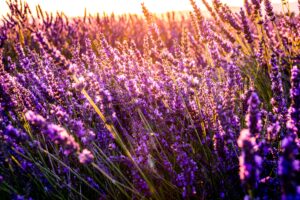
This delicate flower, resembling a mix between chamomile and a wild daisy, grows across the island, especially around Brusje. In the 20th century, it was a major export, valued for its natural insecticidal properties.
Today, it quietly returns each spring, coloring the fields during hikes — a reminder of how deeply nature and life are connected here.
If you want to experience these landscapes properly, a guided hiking experience on Hvar connects these places with the stories behind them.
Wild Asparagus – The Taste of Spring
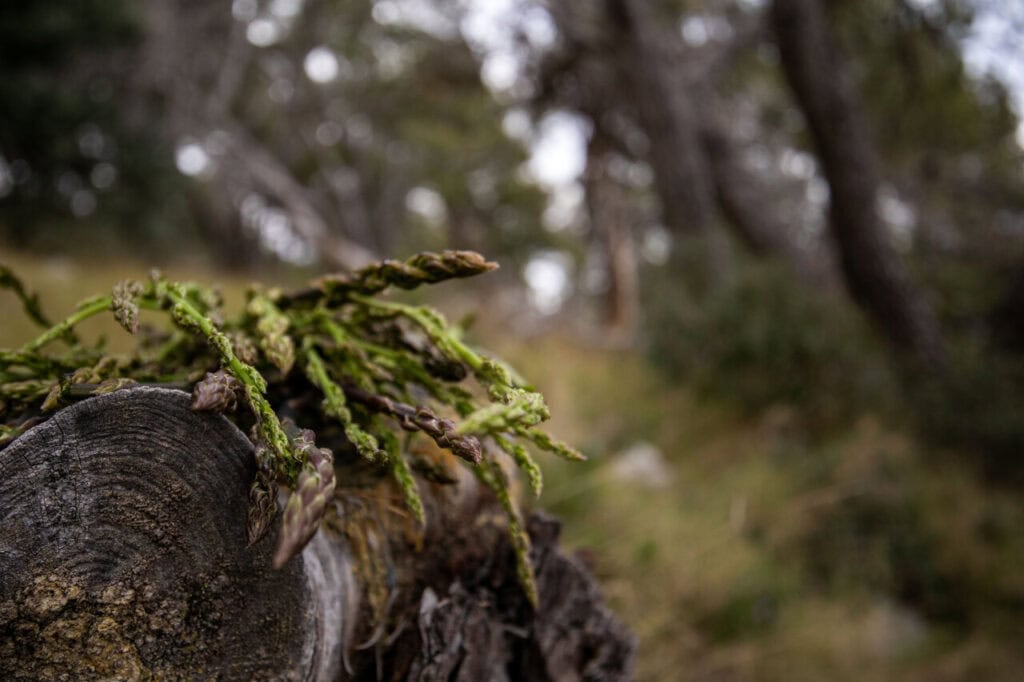
Dalmatia is full of wild asparagus.
On Hvar, the season starts as early as February and can last until May or even June, depending on the weather. It grows in forests, olive fields, along stone walls, in low bushes, across untouched land, simply all around.
Picking asparagus is almost a ritual here. People go out early, quietly searching, competing without saying it out loud.
Its taste is stronger and more bitter than cultivated asparagus, and that’s exactly why people love it. You’ll find it in omelettes, risottos, and simple dishes that don’t need much else.
There are endless ways to prepare it, but the real experience is finding it yourself.
Caper Bush – Growing from Stone Resilience
The caper bush (Capparis spinosa) grows where almost nothing else can.
The caper bush (Capparis spinosa) grows where almost nothing else can.
You’ll see it coming out of stone walls, cliffs, and abandoned houses — rooted in places that seem impossible. It needs very little water and thrives in harsh conditions.
Its flower is one of the most striking on the island — white petals with long purple stamens reaching out like threads.
We still pick capers here. It would be a shame not to — they grow from our walls. Their taste is sharp, salty, and essential in Mediterranean cooking.
Alongside capers, there’s another plant that grows similarly — but always closer to the sea.
Motar.
It grows straight out of the rocks along the shoreline, naturally absorbing salt from the sea. That’s why it already carries a slightly salty, mineral taste even before preparation.
Just like capers, it’s preserved in vinegar. The flavor is strong, fresh, and slightly sharp — and it pairs surprisingly well with dishes like steak. Add a bit of mustard to the mix, and enjoy something completely different.
It’s one of those small, local things most people never notice — but once you try it, you don’t forget it.
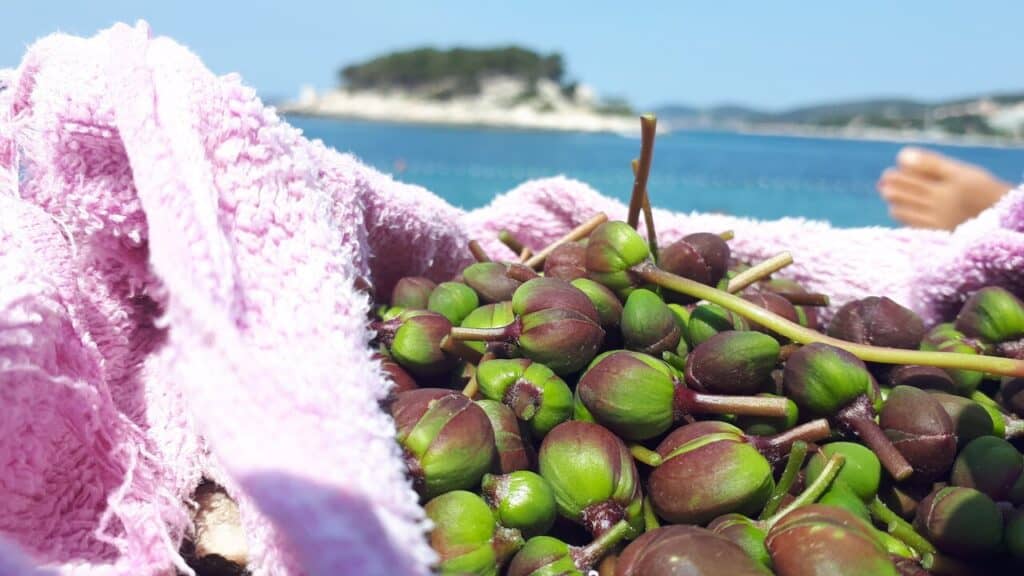
Traditional Wild Plants Hvar Is Known For
Life on Hvar was built on what the land provides.
Many of the wild plants Hvar is known for are still used today in simple, traditional ways.
- St. John’s Wort (Gospina trava) – used to make oils for skin treatment, burns, and wounds
- Rosemary & Sage – used as tea or essential oils, known for digestion and immunity
- Olive leaves – traditionally used for “cleaning the blood” and supporting overall health
These are just a few of the wild plants Hvar offers throughout the year. They’re part of everyday life.

Mišanca – Wild Dalmatian Salad
Mišanca – Wild Dalmatian Salad
One of the most authentic things you can find here is something most people don’t even notice.
Mišanca.
A mix of wild edible plants gathered from the fields.
👉 This typically includes:
- Maslačak (dandelion)
- Divlji luk (wild onion)
- Radič (wild chicory)
- Kopriva (nettle)
- Bljušt (wild asparagus shoots)
It’s simple, seasonal, and incredibly healthy.
You won’t find it on most menus. You have to know where to look — or who to ask.
Wild Garlic – Small but Powerful
Wild garlic grows quietly across the island.
Recognizable by its purple flower and strong aroma, it has an intense garlic flavor. Its seeds and leaves are edible and packed with nutrients.
It’s one of those plants you only notice once someone points it out — and then you start seeing it everywhere.
The Strawberry Tree – Autumn’s Hidden Fruit
Known locally as Planika or Manjiga, the strawberry tree (Arbutus unedo) produces fruit in late autumn, around November and December.
The fruit looks unusual — rough on the outside, soft and sweet inside.
It’s rich in vitamins and often used to make:
- marmalade
- liqueurs
- traditional homemade products
It’s another example of how the island continues to offer something in every season — if you know where to look.
Why This Matters
Hvar is not just beaches and viewpoints.
It’s an island shaped by what grows from its soil.
The more you pay attention to these details, the more the island reveals itself — not as a destination, but as a living place.
If you want to experience that side of Hvar — beyond what’s visible at first glance — a guided hiking experience on Hvar brings these plants, places, and stories together in a way that’s hard to discover on your own.
Final Thoughts
Most people come to Hvar for the sea.
But what stays with you are the small things — the smell of sage, the taste of wild asparagus, the quiet paths between stone walls.
This is just a starting point.
The more you notice the wild plants Hvar offers, the more the island reveals itself.