A true story of ancestry, migration, and rediscovery on the island of Hvar
A personal journey to the island of Hvar to trace family roots in Croatia. Through research, local records, and meeting distant relatives, Tim B. reconnects with his great-grandfather’s home and understands why his family left Croatia generations ago.
When a Journey Becomes Personal
Over the years, I’ve done many different tours on Hvar.
Some are beautiful, some are fun, some are demanding. And some stay with you long after they’re over.
This is one of those stories.
It’s a story about family roots in Croatia, and what happens when someone decides to look beyond travel and search for where their family history truly begins.
Tim B. (out of respect, I’ll leave his family name out) is an American soldier who was stationed in Italy at the time. He wasn’t looking for a classic island experience. He wasn’t interested in beaches or wine bars. What he wanted was much more personal.
Tim wanted to understand where his family came from.

A Croatian Surname That Led Back to Hvar
His family surname was Dulčić. Written with Croatian accents that most people outside the region struggle to pronounce, but here it immediately tells you something. It tells you that the name belongs to stone houses, vineyards, and old Dalmatian villages.
For many people, discovering their family roots in Croatia starts exactly like this — with a surname, a place, and more questions than answers.
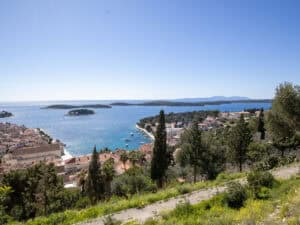
His great-grandfather was born in the late 19th century on the island of Hvar, in a small village called Brusje.
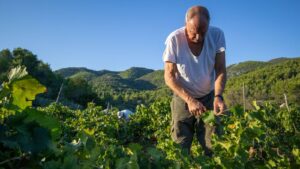
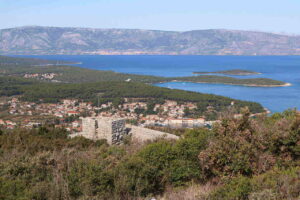
Brusje today is a quiet place. In winter, maybe a hundred people live there, and even that might be generous. It’s the kind of village where time slows down, where houses remember more than people do, and where family stories often disappear simply because no one’s left to tell them.
Searching for Family Origins in Croatia
Tim asked me to research everything I could. He wanted to know exactly where his great-grandfather was born, whether any relatives were still alive, and if there were any physical traces left behind — a house, a grave, a record, anything that could connect him to that past.
It took weeks, but that’s what I do, and I love it. It’s really cool to bring to life something that means the world to someone.
Old archives, church books, local knowledge, and a lot of quiet patience. But slowly, the picture started forming.
Finding the Ancestral Home in Brusje, Hvar Island
One of the first major discoveries was the family house in Brusje. It’s still standing. Not fully preserved, but solid enough to tell a story.
Inside the house, there were drawings on the walls. Grapes, vine leaves, and decorative details painted in red. These things mattered. People didn’t decorate their homes like this unless wine was central to their lives. Furthermore, things cost, so did the decorative elements on the house’s interior walls. Back in time, that showed wealth.
Outside the house, there was even more evidence. A large wine press. An olive oil mill.
All of it pointed to the same conclusion: this was a family whose life was built around the land. Wine and olives weren’t hobbies. They were the main source of income.


The Migration Story Behind Many Croatian Families
For years, the assumption was that Tim’s great-grandfather left because of World War I. That was the family story passed down through generations.
But during my research, I discovered something else that sheds further light on his leaving Croatia.
Another possible reason could be phylloxera — a vine disease that devastated European vineyards in the late 19th century. When it reached Dalmatia, it destroyed the economic foundation of the entire islands. Hvar was no exception.
Wine was the backbone of life here. When the vineyards failed, families had nothing left to rely on. Migration wasn’t a choice. It was a necessity.
Stories like this are a reminder that family roots in Croatia are often closely tied to migration, survival, and difficult decisions made generations ago.
Tim’s grandfather left in the first years of the 20th century, looking for a way to survive and rebuild a life elsewhere.

Meeting Relatives Five Generations Later
One of the most surprising moments came when I discovered that some of his relatives were still living on Hvar.
Cousins.
Five generations apart.
People who had grown up just a few kilometers away from the house his great-grandfather left behind, carrying the same surname, the same family nickname.
When Family Resemblance Crosses a Century
Before Tim even arrived, something else caught my attention.
When we exchanged contact details, I saw his photo, and I noticed a resemblance. His face reminded me strongly of one of the cousins I had already met here in Croatia, Hvar.
Tim always believed his pale skin came from Scottish roots somewhere in his family history. But here, on a Mediterranean, among people known for darker complexions, there was a man who looked strikingly similar to him.
I didn’t mention this similarity to Tim.
I wanted him to notice it himself.
When they met, it took a few moments. Then someone said it out loud. Then everyone saw it. The same features, the same posture, the same expressions, and they were even 5 generations apart.
It seems some things survive migration better than stories ever do.
Restoring a Missing Piece of Family History
The church records in Hvar were remarkably detailed. Births, family connections, nicknames that once defined entire lineages.
But one thing was missing.
The year of his grandfather’s passing.
The priest allowed Tim to write it himself, completing the record of his grandfather’s life in the very place where it began.
That moment was quiet, emotional, and deeply meaningful. It wasn’t about religion or ritual. It was about acknowledgment. About bringing someone back into the story after more than a century of absence.


What Happened After Leaving Croatia
The family members who stayed behind, on the island of Hvar, believed that Tim’s great-grandfather had died young. Possibly during the journey across the Atlantic or shortly after arriving in the United States.
Contact was lost. Only one letter ever made it back.
But the truth was very different.
He lived, he built a life, and he had ten children.
Today, there are dozens of people in the United States carrying the Dulčić surname because one man from Brusje chose to leave in search of survival and dignity.

Reconnecting With Family Roots in Croatia
When Tim finally stood in front of the house, met his relatives, and completed the missing pieces of his family history, it was clear that this experience went far beyond tourism.
This wasn’t about sightseeing. It was about reconnection.
For Tim, reconnecting with his family roots in Croatia was not about the past alone, but about understanding his place in a much longer story.
I feel grateful to have been part of it. Not as a guide, but as someone trusted to help reconnect a family with its origins.
Some tours show you places.
Others bring people home.
This was one of those.