
Where to Find Lavender Hvar Lavedner Fields
Hvar lavender fields still exist — just not in the way most people imagine.
What was once a dominant part of the island’s landscape is now more selective, more hidden, and more real. Fires, changes in lifestyle, and the rise of tourism have reduced lavender production to a fraction of its former scale — but what remains is still very much alive.
What locals remember as the “purple time,” when entire hills were covered, belongs to a different chapter of the island. Today, the remaining fields are not gone — they’re simply more scattered, more local, and more intentional.
And that’s exactly what makes discovering Hvar lavender fields today feel less like sightseeing — and more like finding something real.
Best Time to Visit Hvar Lavender Fields
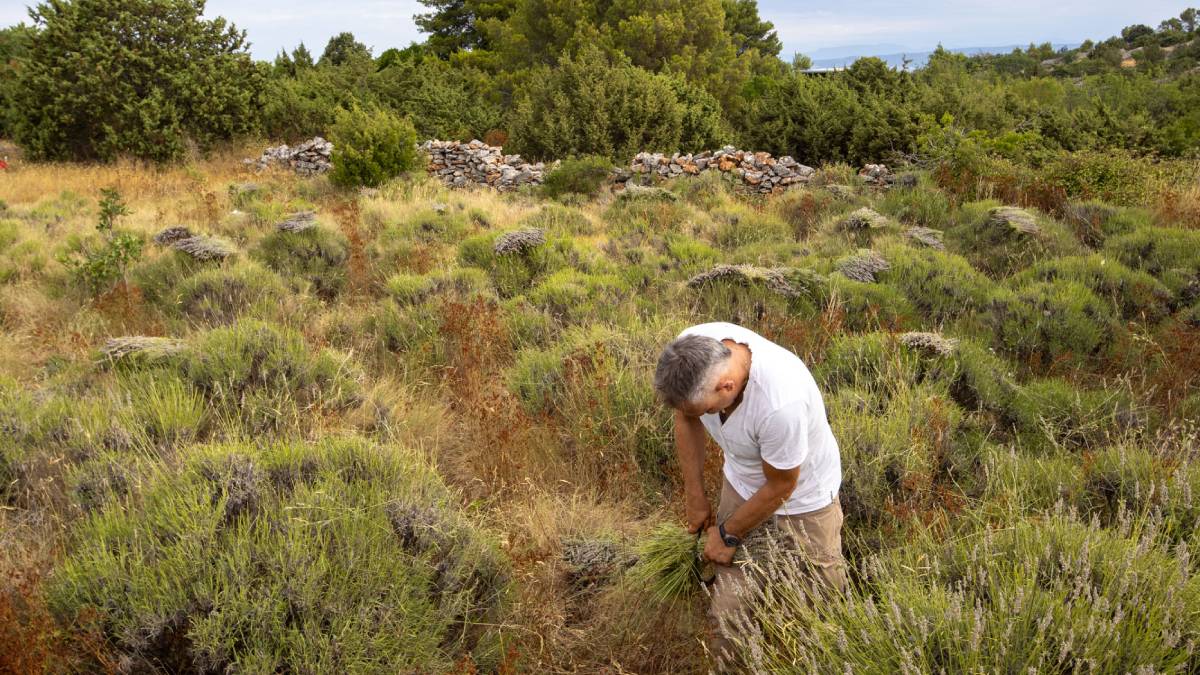
Hvar lavender fields bloom in June and July. For a full breakdown of the season, see my lavender guide in Hvar.
That’s when the fields turn purple, and the island smells like lavender — not in one place, but across different parts of the landscape.
🌿 Lavender Festival in Velo Grablje
In July, the village of Velo Grablje hosts the Lavender Festival.
For a few days, the village returns to what life used to look like when lavender was one of the main sources of income on the island.
You can see:
- how lavender was harvested
- how it was processed
- traditional tools and techniques
Alongside that, there’s:
- local food and wine
- music and traditional singing
- small performances and readings
It’s not built around tourism.
It feels local — simple, slightly rough, and much closer to how Dalmatian villages actually function.
🧠 Outside the Blooming Season
June and July are the most visual — that’s when everything turns purple.
But lavender doesn’t disappear after that.
From August to October, you can still:
- see the fields
- understand how they’re structured
- recognize the plants and landscape
It’s less dramatic, but still very real.
And in some ways, even better for understanding how lavender actually exists on the island — beyond the “perfect photo” moment. If you want a deeper understanding of how lavender shaped the island, read the full lavender story in Hvar.
🎯 What This Means for Your Visit
If you’re coming for the visual experience → come in June or July.
If you’re coming for the experience, context, and understanding → the rest of the season still works.
Main Lavender Locations
You can still find lavender in several parts of the island, but you need to know where to look.
Brusje & Velo Grablje
These are the most well-known areas.
Small fields can be found around the villages, especially during the blooming season. This is also where the lavender tradition on Hvar is still most visible.

Stari Grad Plain (Basina & Mudri Dolac)
Along the road between Hvar Town and Stari Grad, and deeper into the Stari Grad Plain, there are scattered lavender fields.
Look around:
- Basina
- Mudri Dolac
These are not large, commercial fields — but they are still part of the island’s agricultural landscape.
Road to St. Nicholas (Highest Peak)
If you take the off-road route towards St. Nicholas (Sv. Nikola), you’ll find more remote areas where lavender and other Mediterranean plants grow.
Further east, towards Sućuraj, there are also fields of:
- lavender
- immortelle
- rosemary
These areas are more rugged and require:
- off-road vehicle
- bicycle (and strong legs)
- or proper hiking preparation
Northern Side – Around Poljica
There are also lavender fields on the northern side of the island, around Poljica.
These are less visited and more dispersed.
⚠️ Respect the Fields (Important)
Lavender fields on Hvar are not tourist attractions — they are private property.
Someone planted them. Someone maintains them.
Visiting and observing from the road is fine.
Entering fields or picking lavender is not.
It’s not just about rules — it’s about respecting the work behind it.
Growing lavender takes time, effort, and consistency. What looks like a simple field represents years of work.
🌿 The Reality Behind Lavender on Hvar
Lavender used to be one of the main sources of income on the island.
Families built their lives around it.
Harvesting was physical work — done by hand, often under a strong summer sun. That knowledge still exists, but on a much smaller scale today.
🧠 Why Visiting With a Local Makes a Difference
Finding fields on your own is possible.
Understanding them is something else.
With a local, you don’t just see lavender — you learn:
- how it’s planted
- when it’s harvested
- how it’s processed
- how essential oils are made
You also gain access to places and producers you wouldn’t normally find.
🍇 A Personal Note
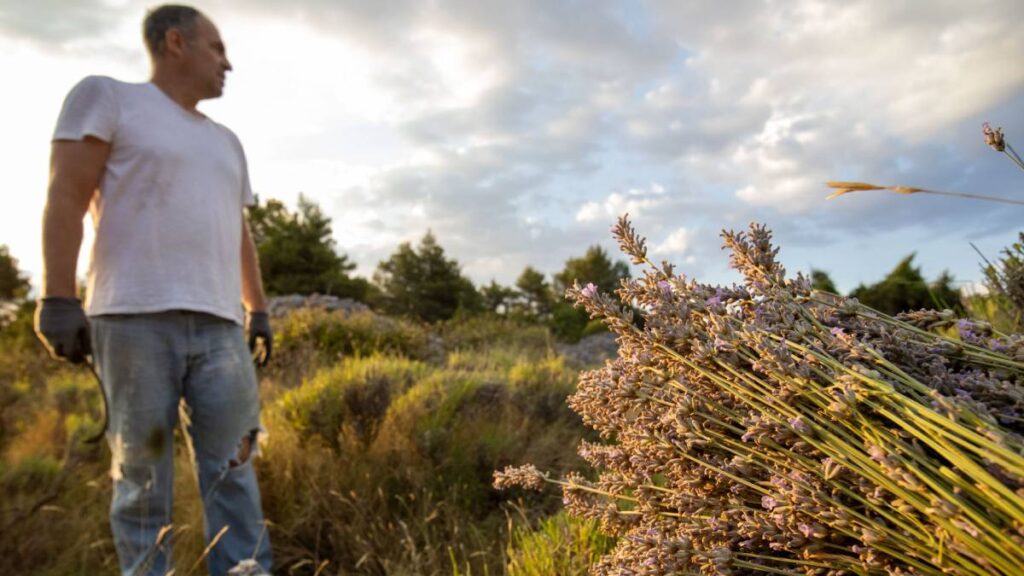
I grew up in the fields of Hvar.
I’ve been harvesting lavender since I was around 10–12 years old and was involved in producing lavender essential oil.
This isn’t something I learned later — it’s something I lived.
🌿 Lavender and Local Products
Many small producers on Hvar still work with:
- lavender
- immortelle
- rosemary
They create oils, cosmetics, and other local products — often in small quantities.
These are not mass-produced items. They come from the same fields you see on the island.
🗺️ Lavender Fields Map (What to Expect)
Instead of one large location, think of Hvar lavender as a network of small, scattered fields.
Main areas:
- Brusje
- Velo Grablje
- Stari Grad Plain (Basina, Mudri Dolac)
- Poljica (north side)
- Road towards St. Nicholas
- Eastern parts towards Sućuraj
👉 These are not always marked or obvious. That’s why many visitors miss them.
🌅 Best Way to Experience Lavender Fields
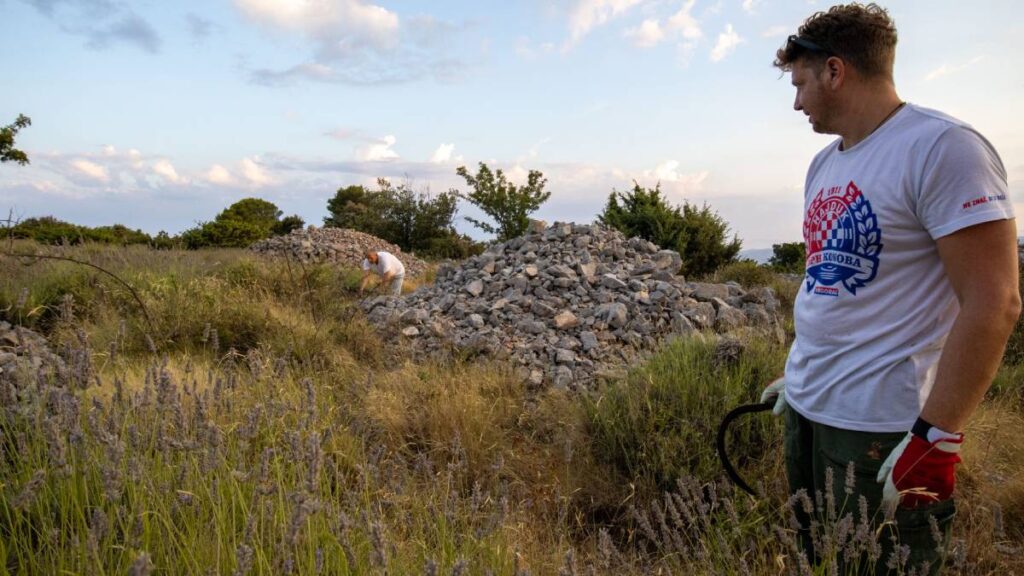
If you want to see lavender properly, the key is not just location — it’s timing and access.
- fields are scattered
- many are private
- some require off-road access
The easiest and most complete way is through a guided experience that connects:
- lavender fields
- villages
- viewpoints
- local producers
👉 Experience Lavender on Hvar
If you want to explore these areas with context, access, and local insight:


